

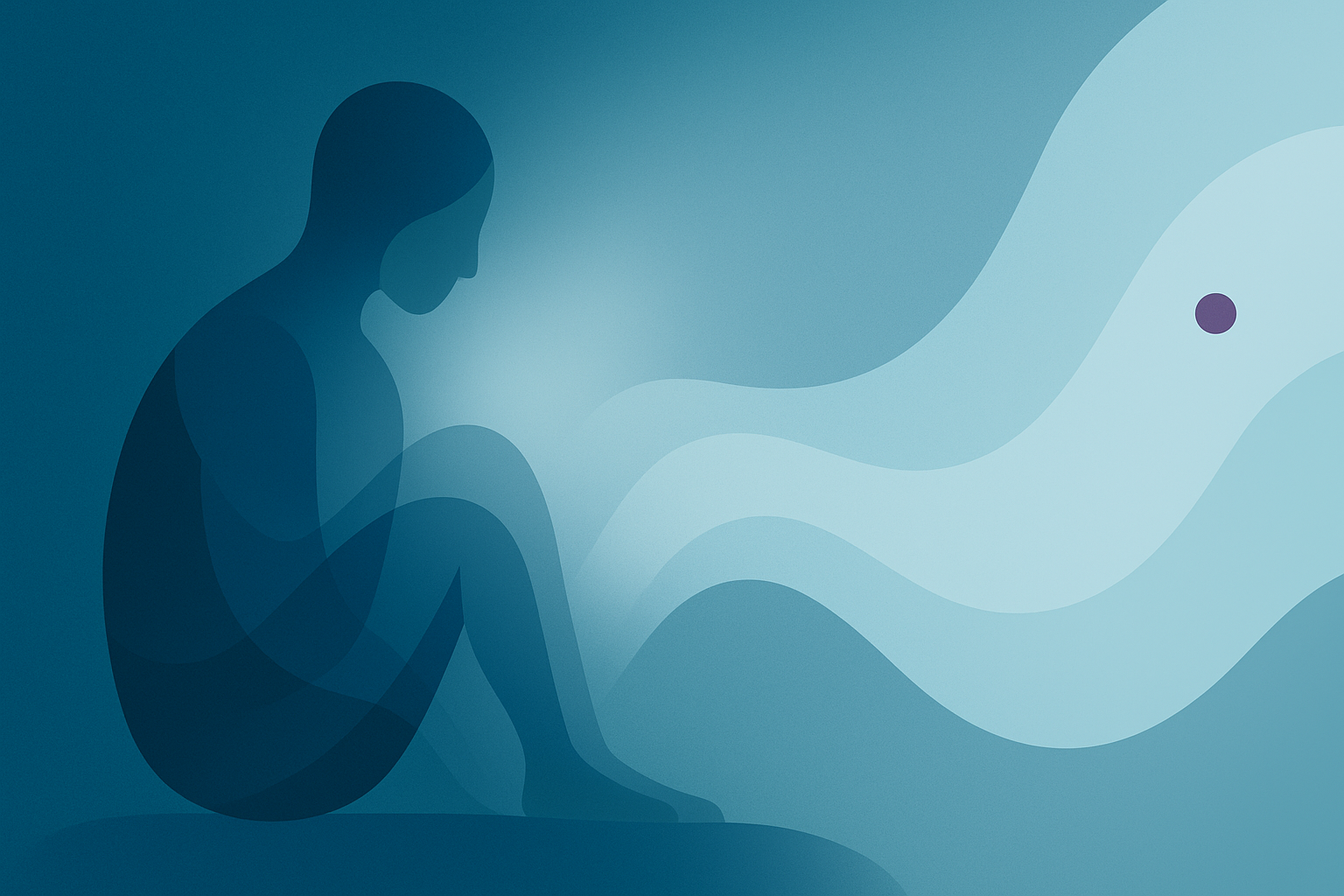
Functional Freeze: When You Want to Move Forward — But Your Body Says “Not Safe Yet” (Ottawa)
There’s a specific kind of stuck that doesn’t feel like “I don’t care.”
It feels more like: I want to do it… I just can’t.
You might know precisely what needs to happen next — and still find yourself scrolling, numbing out, overthinking, or staring at the day like your system won’t let you step into it.
If that’s familiar, you’re not lazy. You’re not broken.
If you live in Ottawa, you may be experiencing functional freeze — a protective nervous system state that can look like procrastination on the outside, but feels like shutdown on the inside.
And if you live in Ottawa, you’re not imagining that winter, workload, and constant “keeping it together” can exacerbate it.
Table of contents
- What is “functional freeze”?
- What functional freeze can look like (in real life)
- Why it happens (without blaming you)
- Why functional freeze is so common in sensitive women
- Ottawa winter can intensify functional freeze
- A gentle reframe: “Stuck” is often a capacity problem, not a character problem
- Functional freeze and the body: why pain and symptoms often come along for the ride
- What helps functional freeze for sensitive women in Ottawa (without forcing your body)
- How I approach functional freeze at Capital Osteopathy (Ottawa)
- If you’re in functional freeze right now, try this (a very small practice)
- When to reach out
- FAQs
- Medical disclaimer
What is “functional freeze”?
Functional freeze is a version of the freeze response that happens in everyday Ottawa life.
It’s not the dramatic, obvious kind of freezing people picture in extreme danger. It’s quieter. More socially acceptable. More confusing.
You can still go to work. You can still make lunches. You can still answer messages.
But inside, your system feels braced, foggy, numb, heavy, or strangely absent — like you’re doing life from behind glass.
Functional freeze often shows up when your nervous system has learned:
Fight won’t work. Flight isn’t possible. So the safest option is to go still.
What functional freeze can look like (in real life)
Functional freeze doesn’t always feel like panic. Often, it feels like nothing.
You might notice:
- You can’t start tasks, even ones you care about
- You’re “behind” but can’t access urgency
- Your brain feels foggy, flat, or quiet in a way that isn’t restful
- You lose words mid-sentence or feel socially blank
- You procrastinate, then shame-spiral, then shut down more
- You feel tired, but not the kind of tired that sleep fixes
- You get stuck making decisions (even small ones)
- You numb out with screens, snacks, busywork, or perfectionism
- Your body feels heavy, braced, or oddly disconnected
Sometimes it even appears to be “being productive.”
You do the safe tasks — the ones you can control — while the meaningful ones stay untouched.
Why it happens (without blaming you)
Your nervous system is always tracking: Is this safe? Can I handle this? Do I have support?
When stress builds — especially stress you’ve had to carry alone — your system can shift into a protective mode.
In everyday life in Ottawa, Functional freeze is often what happens when:
- You’ve pushed through too long without recovery
- You’ve learned it isn’t safe to “need” anything
- You’ve had experiences where speaking up, leaving, or expressing emotion wasn’t possible
- You’ve been high-functioning while quietly overwhelmed for years
In other words: freeze is not a failure.
Freeze is a strategy — one your body learned to keep you going.
Why functional freeze is so common in sensitive women
Many of the women I see in Ottawa are deeply capable — and deeply tired.
They’re doing a lot. They’re thinking about everyone. They’re carrying emotional load.
And often, they’ve had years of being the “strong one,” the “reliable one,” the one who can handle it.
If you feel everything deeply, your nervous system can also register life more intensely:
- noise, conflict, pressure, bright lights, social expectations
- guilt, responsibility, urgency, “shoulds”
- the subtle stress of always being “on”
Functional freeze can be what happens when your system decides:
I can’t keep meeting life at this speed.
And then winter shows up.
Ottawa winter can intensify functional freeze
Ottawa winters are beautiful — and they can be a lot on the nervous system.
Less daylight. More indoor time. More transitions. More clothing layers. More driving stress.
And for many people, a quiet drop in mood or energy that they don’t talk about — because they “should be fine.”
If you notice your shutdown gets worse in winter, it doesn’t mean you’re regressing.
It may simply mean your system has less capacity.
(If this resonates, you might also like: Why Winter Makes Nervous System Symptoms Worse — Especially for Women)
A gentle reframe: “Stuck” is often a capacity problem, not a character problem
When you’re in functional freeze, living in Ottawa, effort doesn’t work the way you want it to.
You can force yourself through a day — but it can cost you.
And the cost might show up later as: irritability, tears, numbness, insomnia, digestive upset, pain flares, or a sudden crash.
So instead of asking, “What’s wrong with me?” try this:
- What is my system trying to prevent?
- What feels unsafe right now — even if I can’t explain why?
- What would one percent more support look like?
Small questions. Soft questions.
The kind your system can answer without defending itself.
Functional freeze and the body: why pain and symptoms often come along for the ride
Functional freeze isn’t “all in your head.” It’s a whole-body state.
When your nervous system shifts into shutdown, you might also notice:
- increased muscle guarding
- breathing changes (shallow, held, upper-chest breathing)
- digestion slowing down, nausea, bloating, appetite shifts
- headaches, jaw tension, neck and shoulder tightness
- flare-ups of chronic pain or inflammatory patterns
- fatigue that feels heavy and unresponsive
Not because your body is failing — but because your body is conserving.
If you’ve ever felt like small stressors suddenly become too much, that’s often a sign of capacity getting tight.
Related read: Why Small Stressors Can Suddenly Feel Like Too Much
What helps functional freeze for sensitive women in Ottawa (without forcing your body)
If you’re in shutdown, the goal isn’t to “push harder.”
The goal is to help your system feel safe enough to come back online — slowly, in layers.
Here are gentle supports that often help:
1) Reduce inputs before adding more “tools.”
Sometimes the most regulating thing is less.
Less noise. Less multitasking. Less news. Less social pressure.
Less self-improvement content telling you you’re behind.
Even a 10% reduction can change how your system responds.
2) Work with your nervous system’s timing
Freeze often improves when you build in transitions.
If your day is back-to-back, your system never gets to exhale.
Try adding small buffers: 2 minutes before you leave, 3 minutes after you arrive, a few breaths before you open your laptop.
Tiny pauses can be the difference between “I can’t” and “I can.”
3) Choose warmth, rhythm, and containment
Freeze tends to soften with signals of safety:
- warm drink, warm shower, heating pad
- gentle walking (not power-walking)
- repetitive rhythm (music, humming, rocking, light stretching)
- simple, nourishing food without pressure to be perfect
These aren’t “hacks.” They’re cues.
4) Be careful with aggressive “mindset” approaches
If you’ve tried to talk yourself out of freeze and felt worse, you’re not alone.
For many sensitive systems, the most regulating message isn’t “You can do it.”
It’s: “You don’t have to force. We’ll go slowly.”
5) Get support that doesn’t overwhelm you
Co-regulation matters.
A safe conversation. A calmer presence. A practitioner who doesn’t rush you.
A space where your body doesn’t have to perform.
How I approach functional freeze at Capital Osteopathy (Ottawa)
In my practice, we work with the body in a gentle, paced, and nervous-system-led way.
My osteopathic work is primarily acupressure-based (not cracking, not forceful techniques).
And I integrate functional medicine and Autonomic Response Testing (ART) to help identify what may be adding load — physically and emotionally — without pushing your system faster than it can go.
For some people in Ottawa, functional freeze is mostly about nervous system patterns and stored stress.
For others, it’s also influenced by factors such as sleep, nutrition, inflammation, chronic infections, environmental stressors, and gut function.
We don’t assume. We listen. We test.
And we choose the next step that feels doable.
If you want a broader starting point, this post may help:
Nervous System Dysregulation in Women in Ottawa: Why Your Body Feels This Way
If you’re in functional freeze right now, try this (a very small practice)
Just for the next 20 seconds:
- Place one hand somewhere on your body that you can feel (chest, ribs, belly, or collarbone).
- Let your exhale be a little longer than your inhale.
- Look around the room and name three neutral things you see.
That’s it.
Not to “fix” anything — just to remind your system:
I’m here. I’m safe enough in this moment.
When to reach out
If functional freeze is affecting your work, relationships, digestion, mood, or pain, you don’t have to carry it alone.
A gentle next step is a Discovery session, where we talk about what you’re noticing, what your body has been doing, and what kind of support would actually feel safe for you.
You can book a Discovery session here.
If you’re not ready yet, that’s okay too.
Sometimes the first step is simply having language for what’s happening.
FAQs
Is functional freeze the same as procrastination?
Sometimes it looks like procrastination, but it’s often different inside.
Procrastination usually has a sense of “I don’t want to.”
Functional freeze often feels like “I do want to — but I can’t access movement.”
Is functional freeze a diagnosis?
No. “Functional freeze” is a descriptive term, not a medical diagnosis.
It can overlap with many experiences (stress, trauma patterns, burnout, depression, anxiety).
If you’re concerned about your mental health or functioning, it’s always okay to involve your physician or a qualified mental health professional.
Why does it happen when nothing “big” is going on?
Your nervous system responds to accumulated load, not just single events.
A season of stress, a long stretch of responsibility, or old patterns of having to cope alone can be enough.
Sometimes the trigger is subtle — a tone of voice, a deadline, a relational dynamic — and your body responds before your mind explains it.
Can grounding exercises make freeze worse?
Yes, sometimes.
If your system has a lot stored underneath, certain grounding practices can feel too intense.
That doesn’t mean you failed — it means your system may need a gentler, slower approach (often with support).
Can kids experience functional freeze?
Absolutely.
Kids can show freeze as zoning out, shutdown, “not listening,” sudden fatigue, or emotional flatness.
It’s often a sign they’ve reached capacity, not a sign they’re being difficult.
Medical disclaimer
This article is for educational purposes only and does not constitute medical advice. It does not diagnose, treat, cure, or prevent any condition. If you have new, worsening, or concerning symptoms (including chest pain, severe fatigue, fainting, or significant mental health changes), please seek care from a qualified healthcare professional or emergency services as appropriate.